Culture &
Heritage
Our culture is not preserved in a museum — it is lived in our governance, our families, our language, and our land. The traditions of the Pukatawagan people shape everything we are.
What Defines Us
Language, art, ceremony, and caring for the land are the four pillars of Cree identity at MCCN.
Cree Language
Our language is a living expression of our worldview. MCCN supports learning at all ages through immersion programs, community events, and Elder-led teaching circles.
Beadwork & Arts
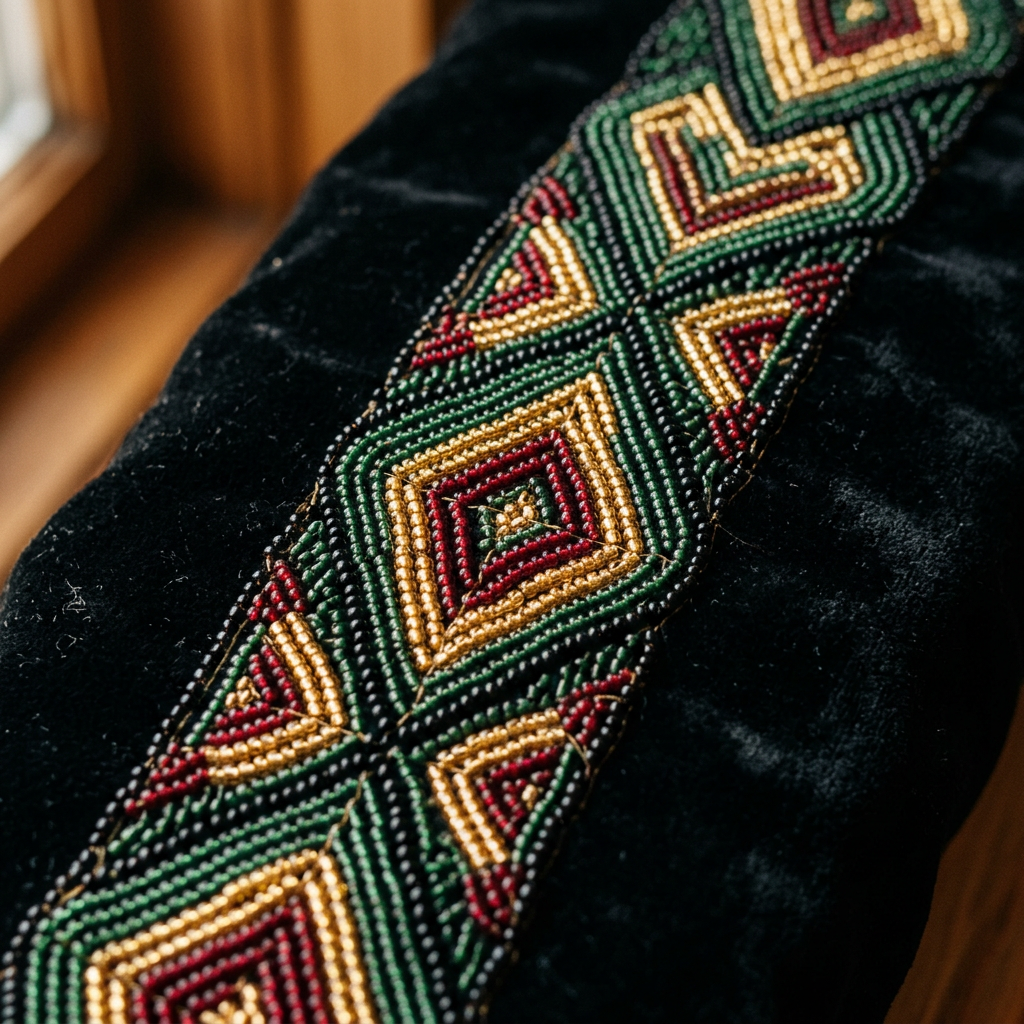
Traditional Cree beadwork encodes centuries of mastery. Geometric patterns carry stories, clan identities, and spiritual meanings — each stitch a word in a visual language.
Ceremony & Song
Drumming, ceremony, and song are the heartbeat of our community. MCCN hosts seasonal gatherings, powwows, and cultural camps to strengthen these living traditions.
Land & Stewardship
The boreal forest, rivers, and lakes of our territory are not resources to be extracted — they are relatives to be cared for. Our relationship with the land is sacred and ongoing.
Patterns That
Tell Stories
Every bead, every pattern, every careful stitch carries meaning. Cree beadwork is a visual language developed over centuries — it does not just decorate, it tells stories and preserves knowledge.
MCCN supports beadwork instructors and community artists through workshops and youth programs, so this tradition continues to grow and be shared.
ᐊᓂᑭᐦᐃᐁᐧᐃᐧᐣ
Traditional Beadwork Art
A Journey Through Time
From our roots in the boreal north to today — the story of the Pukatawagan people.
The Cree People of the Boreal
The ancestors of MCCN — Rocky Cree / Missinippi Cree (Asiniskaw Īthiniwak) — have lived, hunted, and gathered in the boreal forests and lake systems of northern Manitoba since the retreat of the glaciers about 10,000 years ago. The land is identity, memory, and responsibility.
Treaty 6 Adhesion Signed
On February 11, 1889, the Mathias Colomb Band signed an adhesion to Treaty 6 at Montreal Lake, establishing a nation-to-nation relationship with the Crown — one of shared stewardship and mutual respect, not a surrender of sovereignty.
Separate Reserve Established
After separating from the Peter Ballantyne Band of Pelican Narrows, the community settled at Highrock Lake along the Churchill River. In 1910, the Inspector of Indian Affairs formally recognized Pukatawagan as a separate reserve, with Mathias Colomb appointed as its first Chief — a role he held until his death in 1932.
Prayer River Reserve Surveyed
On August 29, 1926, the Ayamihi Sippi (Prayer River) reserve was officially surveyed under the Mathias Colomb Indian Band. The reserve, along with Pukatawagan, formed the ancestral territory of the Nation.
Treaty Land Entitlement Agreement
MCCN joined 18 other First Nations in signing a Framework Agreement on Treaty Land Entitlement with the governments of Canada and Manitoba, asserting land rights owed under Treaty 6.
A Sovereign, Modern Nation
MCCN continues to assert its rights, strengthen governance, and celebrate culture — building a future that honours the past while meeting the ambitions of its youth.
ᐃᑌᓂᑕᒧᐃᐧᐣ
The way we think; the way we are.
The Cree Language
MCCN is committed to ensuring every generation has the opportunity to learn and speak the Rocky Cree language — the most direct expression of who we are.
Join the Language Revitalization Movement
Whether you are a fluent speaker, a learner, or a curious beginner — there is a place for you in MCCN's language programs.